
Premier Flood Mitigation Crew Twin Hills › Water Extraction Removal
IICRC-CERTIFIED · Twin Hills WATER EXTRACTION TEAM
Water Extraction Removal in Twin Hills, AK
Water extraction is the phase where IICRC training shows most clearly — extraction chamber math, moisture meter calibration, removal sequence (water first, then porous materials, then structural drying). Our Twin Hills crews bring the gear and the protocol discipline that ordinary mitigation companies skip.
within 60 minutes
Last reviewed: June 2026 · IICRC-certified Twin Hills restoration crew
Water damage doesn't follow a schedule, which is why Premier Flood Mitigation Crew Twin Hills operates water extraction removal as a round-the-clock service in Twin Hills. Whether the source is a burst pipe, appliance overflow, sewage backup, storm water intrusion, or roof failure, the first 24 hours determine the cost and complexity of restoration. Our IICRC-certified crews bring truck-mounted extraction equipment, calibrated drying systems, moisture testing tools, and antimicrobial treatment to every Twin Hills call — equipment that the average homeowner cannot rent or operate effectively under emergency conditions.
Water Extraction Removal Service Area in Twin Hills, AK
Premier Flood Mitigation Crew Twin Hills provides water extraction removal throughout Twin Hills, Alaska and the surrounding Dillingham Census Area area. Our IICRC-certified crews dispatch 24/7 to homes and businesses across Twin Hills — no storefront, no waiting room, just rapid on-site response.
Twin Hills ZIP Codes We Serve99576
Twin Hills Neighborhoods CoveredTwin Hills, Togiak, Goodnews Bay, Manokotak, and surrounding rural areas
Trusted Twin Hills Water Extraction Crew
10 years+
Years serving Twin Hills
over 200 water extraction jobs
Local restoration jobs handled
Our team has successfully handled over 200 water extraction jobs in Twin Hills, including post-storm recovery and plumbing failure remediation. We are deeply familiar with the unique challenges of the region's climate and construction.
Local experience matters because single-family homes in Twin Hills behaves differently — different construction eras, building codes, common failure points, and climate exposures. Our team has successfully handled over 200 water extraction jobs in Twin Hills, including post-storm recovery and plumbing failure remediation. We are deeply familiar with the unique challenges of the region's climate and construction.
Water Extraction Credentials
Certifications: IICRC WRT, ASD, AMRT certified
Alaska Contractor License (municipal licensing)
Our Twin Hills team holds IICRC WRT, ASD, and AMRT certifications along with Alaska Contractor License (municipal licensing).
Why credentials matter for your Twin Hills water extraction removal claim: IICRC certifications are the industry standard carriers reference in coverage documentation. Our local crews hold: IICRC WRT, ASD, AMRT certified. Our Twin Hills team holds IICRC WRT, ASD, and AMRT certifications along with Alaska Contractor License (municipal licensing).
Step-by-Step Water Extraction
From first call to final completion, our Twin Hills water extraction removal workflow is built around five core phases. within 60 minutes Each phase has measurable exit criteria — moisture readings, equipment counts, photographic documentation — before we move to the next.
- Inspection & Moisture Mapping — Thermal imaging and pin-type moisture meters identify the full extent of water intrusion, including hidden moisture in wall cavities, subflooring, and ceiling assemblies that visual inspection alone would miss.
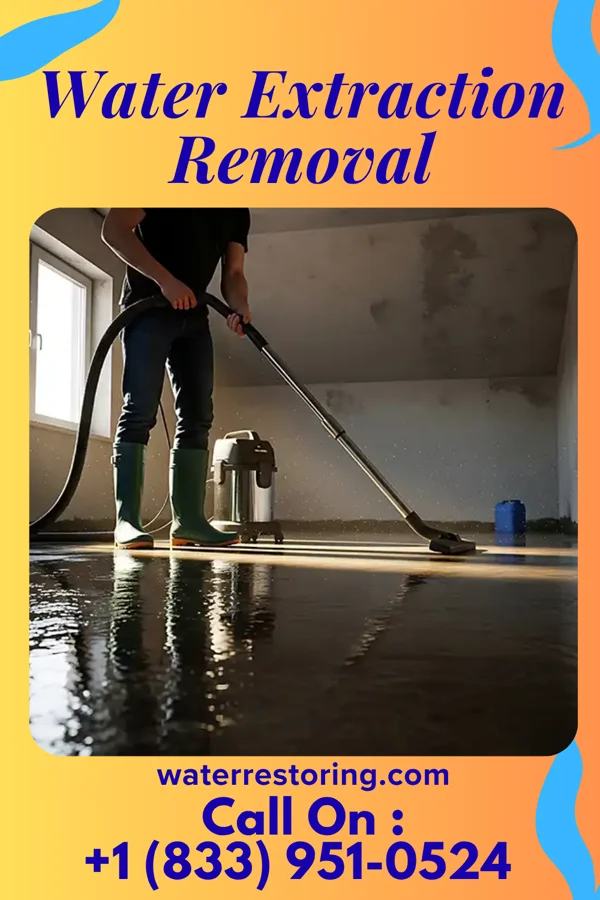
- Water Extraction — Truck-mounted or portable vacuum extractors remove standing water and surface moisture from carpet, padding, hard surfaces, and confined cavities. Effective extraction reduces total drying time by hours or days.
- Structural Drying — Calibrated low-grain refrigerant or LGR dehumidifiers paired with axial and centrifugal air movers create a controlled drying environment. Equipment counts follow IICRC chamber-math formulas based on cubic footage and saturation level.
- Antimicrobial Treatment — EPA-registered antimicrobials are applied to affected surfaces to prevent microbial growth during the drying period and to neutralize any organisms already present in Category 2 or Category 3 water.
- Final Verification & Documentation — Daily moisture logs, photographic records, equipment receipts, and final dry-to-baseline readings are compiled into a documentation package for your insurance adjuster and your records.
Water Extraction Demands in Twin Hills
Twin Hills property owners turn to certified water damage restoration when storm flooding and plumbing failures.
Twin Hills experiences heavy rainfall and coastal storms that can lead to significant flooding. The region's remote location and limited infrastructure increase the risk of prolonged water exposure and structural damage.
Twin Hills experiences heavy rainfall and coastal storms that can lead to significant flooding. The region's remote location and limited infrastructure increase the risk of prolonged water exposure and structural damage. The dominant local driver is storm flooding and plumbing failures. Water damage progresses in stages: spread, absorption, microbial growth, structural compromise — each stage compounds the cost.
️ Emergency in Twin Hills?Worried about water damage in Twin Hills? Talk to a local crew now.
+1 (833) 951-0524Extraction Equipment for Every Twin Hills Job
Professional restoration equipment is what separates documented mitigation from a partial dry-out. Twin Hills's single-family homes property mix demands specific loadouts: truck-mounted vacuum extractors, calibrated dehumidifiers, moisture meters and thermal imaging cameras.
- Truck-mounted vacuum extractors — Pull thousands of gallons per hour from carpets, padding, and hard floors with vacuum strength a homeowner-grade wet-vac cannot match.
- Low-grain refrigerant (LGR) dehumidifiers — Industrial dehumidifiers calibrated for water damage drying, capable of pulling moisture out of structural materials at low ambient humidity levels.
- Axial and centrifugal air movers — High-velocity airflow placed according to IICRC drying chamber math (typically one mover per 50-75 sq ft of affected area, plus additional units for confined cavities).
- Pin and pinless moisture meters — Direct moisture content readings on wood, drywall, and masonry, used to verify dry-to-baseline targets before equipment is removed.
- Thermal imaging cameras — Identify hidden moisture in wall cavities, ceiling assemblies, and behind cabinets that visual inspection cannot detect.
- HEPA air scrubbers — Filter airborne particulates and microbial spores from the work environment, especially during Category 2 or 3 water cleanup.
- EPA-registered antimicrobials — Applied to affected surfaces to prevent microbial growth during drying and neutralize any organisms in contaminated water situations.
Get this equipment dispatched to your Twin Hills property — call now.
+1 (833) 951-0524Extraction Insurance Coordination
We work directly with State Farm, Allstate, USAA and all major carriers in Twin Hills.
Our Guarantee: 100% satisfaction guarantee with written moisture clearance certificate
We offer risk-reduction guarantees, including 24/7 emergency service and a moisture clearance certificate to ensure complete water removal and prevent future damage.
The typical claim process for Twin Hills water extraction removal runs in parallel with mitigation: extraction starts immediately, your adjuster is notified within 24 hours, daily logs feed the claim file. We work directly with State Farm, Allstate, USAA and all major carriers in Twin Hills.
Extraction Coverage Across Twin Hills
Premier Flood Mitigation Crew Twin Hills serves all neighborhoods of Twin Hills, including: Twin Hills, Togiak, Goodnews Bay, Manokotak, and surrounding rural areas.
We are experienced with Twin Hills's common construction — single-family homes — and the specific water-damage risks each housing type presents.
Housing stock matters more than most people realize. single-family homes drives different drying approaches — slab foundations hide moisture differently than crawl-space, tile-on-concrete dries differently than carpet or hardwood. Local crews recognize the patterns from the first call.
Twin Hills Water Extraction Investment
Typical project range: $1,500-$6,500
The most expensive water extraction removal mistake is starting too late. Water that sits 12-24 hours often requires only extraction and drying. Past 48-72 hours, drywall removal, insulation replacement, and antimicrobial treatment add thousands. High humidity levels in Twin Hills create an ideal environment for mold growth after water damage. Without immediate extraction and drying, mold can spread rapidly, posing health risks and increasing restoration costs.
Local Mold Risk
High humidity levels in Twin Hills create an ideal environment for mold growth after water damage. Without immediate extraction and drying, mold can spread rapidly, posing health risks and increasing restoration costs.
️ Emergency in Twin Hills?Get an upfront written assessment for your Twin Hills property — call now.
+1 (833) 951-0524When Twin Hills Extraction Demand Peaks
Water damage events spike during predictable weather windows in Alaska — winter freeze cycles cause pipe ruptures, spring storms drive ground-water intrusion, summer thunderstorm seasons cause roof leaks and basement flooding, and fall weather transitions stress aging plumbing. Knowing your local risk window helps with preparation: maintaining roof drainage, insulating exposed pipes, testing sump pumps, and having a restoration contact saved before the emergency hits.
Seasonal preparedness saves money. Twin Hills property owners who know their peak risk window — and have a restoration contact saved before the emergency hits — recover faster and file cleaner insurance claims.
Commercial & Multi-Unit Extraction
Premier Flood Mitigation Crew Twin Hills also handles commercial water damage in Twin Hills, including office buildings, retail, restaurants.
Commercial properties in Twin Hills have different equipment requirements than residential. office buildings, retail, restaurants Larger air movers, higher-capacity dehumidifiers, HEPA filtration for occupied buildings, separate drying zones for tenants, coordination with property management. We bring the equipment scale and operational discipline commercial restoration demands.
Frequently Asked Questions — Twin Hills Water Damage Restoration
Does homeowner insurance cover water extraction removal in Alaska?
We work directly with State Farm, Allstate, USAA and all major carriers in Twin Hills. Premier Flood Mitigation Crew Twin Hills bills your insurance carrier directly with industry-standard documentation that meets adjuster review requirements. Your only out-of-pocket cost should be your deductible.
How long does water extraction removal typically take in Twin Hills?
Most water extraction removal projects in Twin Hills complete within 3–5 days for residential properties — extraction takes hours, structural drying typically runs 2–4 days depending on water saturation and material types. We monitor moisture readings daily and only remove equipment after dry-to-baseline targets are confirmed. Larger commercial or whole-property incidents can extend to 7–10 days.
What's the difference between water damage cleanup and full restoration?
Cleanup typically refers to extraction and surface drying — removing standing water and obvious moisture. Full restoration includes structural drying with calibrated equipment, antimicrobial treatment, repair or replacement of damaged materials, and final moisture verification. Premier Flood Mitigation Crew Twin Hills provides full IICRC-certified restoration so your Twin Hills property returns to pre-loss condition, not just dried-on-the-surface.
Will mold grow if water damage isn't treated within 24 hours in Twin Hills?
High humidity levels in Twin Hills create an ideal environment for mold growth after water damage. Without immediate extraction and drying, mold can spread rapidly, posing health risks and increasing restoration costs.
Are your Twin Hills water damage technicians IICRC-certified and licensed?
Yes. Our Twin Hills crews hold the following certifications: IICRC WRT, ASD, AMRT certified. Alaska Contractor License (municipal licensing) Insurance carriers specifically look for IICRC credentials when evaluating water damage claims, which makes documentation significantly cleaner.
What equipment do you use for water extraction removal in Twin Hills properties?
Every Twin Hills water extraction removal call gets a full IICRC-spec equipment loadout: truck-mounted vacuum extractors (thousands of gallons per hour throughput), low-grain refrigerant (LGR) dehumidifiers calibrated for water damage drying, axial and centrifugal air movers placed by chamber-math formula, pin and pinless moisture meters, thermal imaging cameras for hidden-moisture detection, HEPA air scrubbers for occupied spaces, and EPA-registered antimicrobials.
Ready to Stop Water Damage in Twin Hills?
IICRC-certified technicians on-call 24/7. Direct insurance billing.
Call +1 (833) 951-0524Other Water Damage Services in Twin Hills
Water Extraction Removal Near Twin Hills